

Long Term Effects of Nootropics: What to Know
Table of Contents
- What Long Term Effects of Nootropics Actually Look Like
- Cognitive Enhancer Side Effects: What Shows Up Over Time
- How to Cycle Nootropics to Limit Long-Term Risk
- FDA Regulation of Dietary Supplements and What It Means for Safety
- Dependency, Tolerance, and Individual Variability
- How to Read a Nootropic Label for Long-Term Use
- Frequently Asked Questions
Last Updated: September 20, 2026
What Long Term Effects of Nootropics Actually Look Like
Most people evaluating the long term effects of nootropics ask whether a pill will make them smarter. The better question is what happens to sleep, blood pressure, mood, and baseline cognition after months of daily use. At DIALED, we build a nootropic coffee, so we have a commercial stake here, and we still think the honest answer is unglamorous: the long term effects of nootropics depend almost entirely on what is in the product, how much you take, and how long you take it without a break.

Short-Term Feel vs. Long-Term Change
The first dose tells you almost nothing about long-term safety. A stimulant can feel clean on day one and still erode sleep quality by week six, and sleep loss is the most common hidden cost of daily cognitive enhancement.
What the Clinical Evidence Does and Does Not Show
Clinical evidence supports short-term effects for several common ingredients, particularly L-theanine paired with caffeine and Rhodiola under stress. It does not support confident claims about years of continuous use, and says almost nothing about stacking five or more compounds at once.
Cognitive Enhancer Side Effects: What Shows Up Over Time
Cognitive enhancer side effects rarely announce themselves on day one. They surface as patterns: sleep that takes longer to arrive, a resting heart rate that creeps up, anxiety that feels baseline until you skip a dose.
- Resting heart rate and blood pressure, taken at the same time each day
- Time to fall asleep, and whether you wake during the night
- Mood and irritability, rated on a simple 1-5 scale
- Appetite and afternoon energy dips
- Any new headache, jaw tension, or stomach upset
Cardiovascular Risks, Sleep, and Mood Signals to Track
Cardiovascular risks from stimulant-heavy stacks are the most underrated concern for long-term users. Caffeine raises heart rate and blood pressure acutely, and the effect is larger in people who are stimulant-sensitive or already have elevated blood pressure.
How to Cycle Nootropics to Limit Long-Term Risk
Learning how to cycle nootropics is the single most useful habit for anyone planning months or years of use. Cycling means scheduling deliberate breaks so tolerance, dependency, and cumulative cardiovascular load do not build unchecked. But most advice stops at the schedule; the part that actually protects you is the taper and the baseline test.
Why Cycling Works: The Pharmacology
A break works because it lets compensatory changes reverse. Adenosine receptors upregulated by chronic caffeine exposure downregulate toward baseline over roughly one to two weeks of abstinence. Dopamine transporter density recovers more slowly after stimulant exposure, which is why a two-day weekend off does almost nothing for a heavy prescription-stimulant user and a two-week break does a lot.
A Practical Cycling Framework
There is no single correct schedule, but a defensible starting point for a stimulant-based daily product:
- Daily rhythm: five days on, two days off. The two off days should be consecutive, not split, so adenosine signaling has time to normalize.
- Longer break: one to two weeks off every eight to twelve weeks. This is the break that reveals baseline drift.
- Annual reset: one four-week break per year if you have been using daily for more than twelve months. This is the only interval long enough to distinguish tolerance from genuine baseline change.
Tapering: The Math
Cold-turkey cessation of a daily stimulant is the most common reason people fail a break. The taper is simple but needs numbers.
Reinforced Coffee + Reinforcement →
Caffeine taper (for a 200 mg/day habit):
- Days 1-3: 150 mg/day (75% of baseline)
- Days 4-6: 100 mg/day (50%)
- Days 7-9: 50 mg/day (25%)
- Day 10 onward: 0 mg
Withdrawal: What to Expect and How Long
Withdrawal is real and predictable, which is good news: predictable problems can be planned for.
| Substance | Peak Onset | Typical Duration | Hallmarks |
|---|---|---|---|
| Caffeine | 20-51 hours | 2-9 days | Headache, fatigue, brain fog, irritability |
| Prescription stimulant | 1-3 days | 1-3 weeks crash, longer mood tail | Anhedonia, hypersomnia, low motivation |
| Ashwagandha | 1-3 days | 1-2 weeks | Rebound anxiety, insomnia |
| Rhodiola / Lion's Mane | Variable | Usually mild | Low motivation, flatness |
Baseline Cognitive Recovery: Is the Damage Reversible?
This is the question competitors do not answer, and the one long-term users actually care about. The honest answer: it depends on the substance and the duration.
- Caffeine: cognitive performance returns to pre-use baseline within one to two weeks of abstinence in most users. There is no evidence of permanent cognitive deficit from caffeine alone at typical doses.
- Prescription stimulants: attention and working memory typically return to baseline within weeks to months after cessation, but the recovery curve is slower after years of daily use, and some users report a prolonged period of reduced motivation that can last several months. The clinical literature on full reversibility is mixed and mostly based on therapeutic-dose studies, not the higher doses some users take.
- Botanical nootropics: the data is too thin to make confident claims. Most users report a return to baseline within a few weeks; a minority report lingering flatness.
- Stacked use: unknown. There is no long-term study of multi-ingredient nootropic stacks, which is the strongest argument for cycling and for keeping the stack small.
The Baseline Test That Matters
After two weeks off, rate your focus, mood, and sleep on the same 1-5 scale you used while on. Compare against a baseline you recorded before you started. If you are worse than your pre-use baseline, the product was masking a problem rather than solving one, and the next step is a clinician, not a stronger dose.
FDA Regulation of Dietary Supplements and What It Means for Safety
FDA regulation of dietary supplements does not work the way most buyers assume. Supplements are regulated as food, not drugs, so products do not need FDA approval before they are sold.
A "proprietary blend" label lets a manufacturer list ingredients without disclosing amounts. You cannot assess dose, compare products, or judge long-term risk from a blend, which is why undisclosed dosing is the clearest red flag in this category.
Dependency, Tolerance, and Individual Variability
Dependency and tolerance are not the same thing, and confusing them leads people to dose up when they should back off. Tolerance means the same dose does less. Dependency means stopping produces symptoms. A third state, sensitization, means the same dose does more, and long-term users almost never see it coming.
The Mechanisms Behind Tolerance and Dependency
The pharmacology is well characterized for the two most common nootropic bases.
Why Two People React Differently to the Same Dose
Individual variability is the factor most guides skip, and it determines whether a daily habit stays benign or becomes a problem.
Reinforced Coffee + Reinforcement →
- CYP1A2 and CYP2A6 genotype. These liver enzymes metabolize caffeine. Slow metabolizers clear it roughly three to four times more slowly than fast metabolizers, which means an afternoon dose that is trivial for one person is a sleep-architecture problem for another. This is one of the most studied gene-caffeine interactions in the literature.
- COMT genotype. Catechol-O-methyltransferase breaks down dopamine and norepinephrine. People with the Val/Val variant clear dopamine quickly and often tolerate stimulants well; Met/Met carriers clear it slowly and are more prone to anxiety and overstimulation on the same dose.
- Baseline cardiovascular status. Resting blood pressure, family history, and existing arrhythmias change the risk calculus more than any ingredient choice.
- Baseline sleep and psychiatric history. A person already sleeping six hours a night has no reserve to borrow from. A person with a history of anxiety or bipolar spectrum illness has a different ceiling on stimulant exposure.
- Age and polypharmacy. Liver clearance slows with age, and interactions with prescription medications (SSRIs, MAOIs, blood pressure drugs) can amplify or blunt nootropic effects unpredictably.
The Cumulative Risk of Stacking
This is the gap the clinical literature and most competitors do not address. Almost no one takes a single nootropic: a typical daily stack includes caffeine, L-theanine, Alpha-GPC or citicoline, L-tyrosine, Rhodiola, Lion's Mane, and often a B-vitamin complex, all at once. Each ingredient may have short-term safety data; the combination almost never does.
- Cardiovascular load. Caffeine, yohimbine, synephrine, and high-dose tyrosine all push heart rate and blood pressure in the same direction. The cumulative effect over years is not studied.
- Cholinergic overload. Alpha-GPC, citicoline, huperzine A, and Lion's Mane all increase acetylcholine signaling. Individually fine; stacked chronically, some users report headache, muscle twitching, and low mood from cholinergic excess.
- Hepatic and renal processing. Every active compound is metabolized somewhere. A seven-ingredient stack is seven simultaneous demands on the same enzyme pathways, and competitive inhibition between them can raise blood levels of one ingredient above what its own study used.
- Sleep architecture. Stimulants delay sleep onset; cholinergics can fragment REM. Stacked, the effect on slow-wave sleep over months is the single most under-monitored long-term risk.
Signals to Watch and What They Mean
| Signal | What It Usually Means | What to Do |
|---|---|---|
| Same dose feels weaker | Tolerance building (adenosine receptor upregulation) | Take a longer break, do not increase dose |
| Headache or fatigue on off days | Dependency forming | Taper, do not quit cold |
| Resting heart rate rising | Cumulative cardiovascular load | Reduce dose, see a clinician |
| Sleep onset getting slower | Adenosine masking | Move last dose earlier, cut total caffeine |
| New anxiety or jitteriness | Overstimulation, possibly COMT-related | Cut caffeine, keep theanine |
| Muscle twitching, low mood | Cholinergic excess from stacked cholinergics | Drop one cholinergic, reassess in a week |
| Anhedonia or flatness on off days | Dopaminergic downregulation | Longer taper, consider clinician input |
What This Means for Long-Term Use
Two people can take the identical stack for a year and end up in opposite places. The difference is not willpower: it is genotype, baseline cardiovascular and sleep health, total caffeine load, and whether the person ever tested their baseline with a real break. The only way to know which group you are in is to measure, taper, and compare.
How to Read a Nootropic Label for Long-Term Use
Reading a label for long-term use comes down to one question: can you see every dose? If not, you cannot evaluate long-term safety, because dose is what separates a studied ingredient from an unknown exposure.
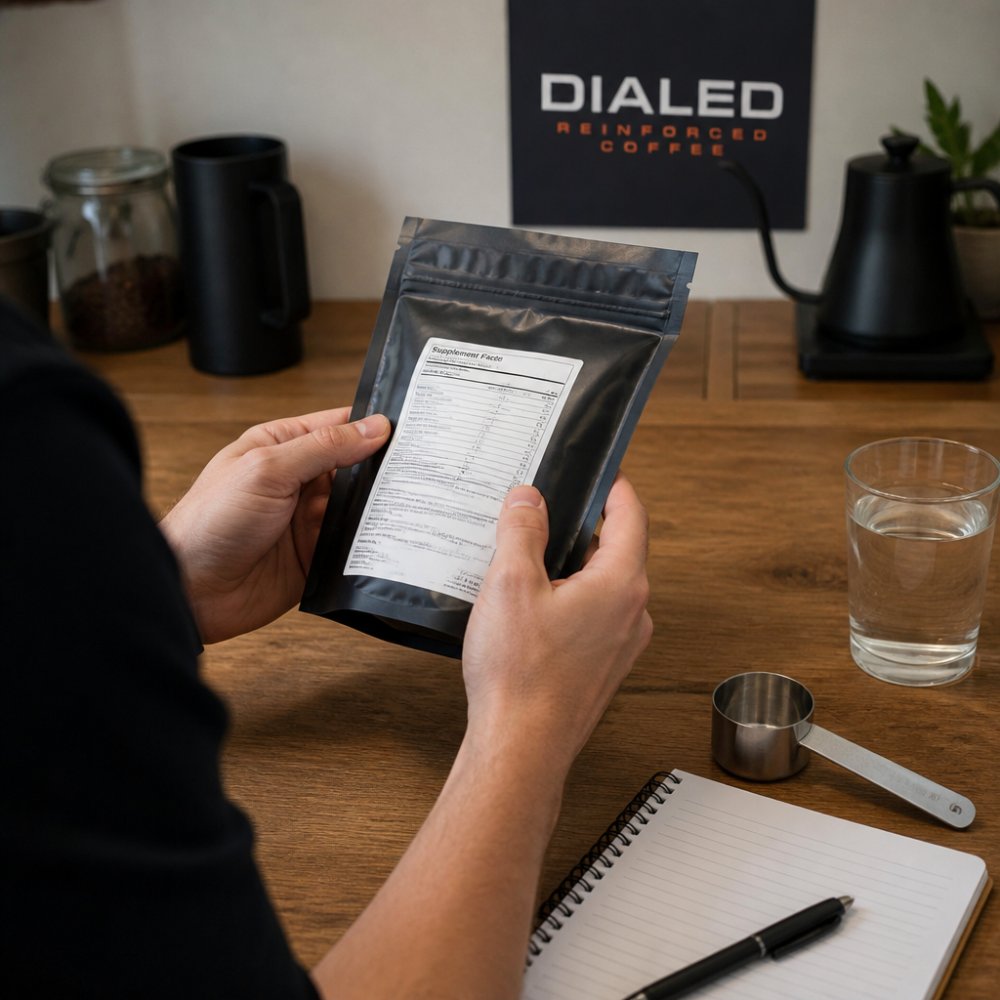
Check the label against this list before you buy:
- Every active ingredient listed with a milligram amount
- No "proprietary blend" hiding the doses
- Third-party testing stated, with purity and potency in scope
- Total caffeine per serving clearly shown
- Serving size and frequency guidance you can actually follow
Frequently Asked Questions
Can I take nootropics every day, or do I need to cycle them?
Daily use is possible, but cycling is the safer default. A common approach is five days on, two days off, or four weeks on followed by one week off. Cycling helps you tell whether the formula is still doing the work or whether you are running on habit. It also gives you a clean baseline to check sleep, resting heart rate, and mood without the stack in your system.
Can you become dependent on nootropics?
Dependency on long term nootropics is mostly tied to the stimulant side, not the adaptogens. Caffeine is the clearest example: stopping abruptly can bring headaches, low mood, and fatigue for several days. Tapering the dose over one to two weeks reduces that. Non-stimulant ingredients like L-theanine, Rhodiola, and Lion's Mane are not associated with the same withdrawal pattern in the published literature.
How does FDA regulation of dietary supplements affect nootropic safety?
Under the Dietary Supplement Health and Education Act, the FDA does not approve supplements before they are sold. The agency can act after a product reaches the market if it is adulterated or misbranded. That means the label is your main safety document. Look for third-party testing, individually disclosed doses, and no proprietary blends, because those signals are what separate a verifiable formula from a marketing claim.
Do nootropics provide lasting benefits or just temporary focus?
Most of the effect is acute. You feel L-theanine and caffeine working within an hour, and the benefit fades as they clear. Ingredients like Lion's Mane and Alpha-GPC are studied for longer-term support of mental clarity, but the evidence is still developing. The honest answer is that no nootropic replaces sleep, training, and recovery. The stack supports a baseline you already maintain.