

Kimera Koffee vs London Nootropics Comparison
Table of Contents
- Kimera Koffee vs London Nootropics: The Quick Comparison
- Kimera Koffee Ingredients: What's Actually in the Blend
- London Nootropics Coffee Review: Flavor, Format, and Focus
- Nootropic Coffee Caffeine Content: Dose, Stimulation, and Crash Risk
- Nootropic Coffee Side Effects: Who Should Be Careful
- Taste, Preparation, and Daily Convenience
- Value and Cost Per Serving: What You Pay For
- Conclusion: Which Nootropic Coffee Fits Your Routine?
- Frequently Asked Questions
Last Updated: October 15, 2026
Kimera Koffee vs London Nootropics: The Quick Comparison
The Kimera Koffee vs London Nootropics comparison comes down to a simple split: Kimera Koffee is a full-caffeine, taurine-boosted ground coffee built for raw output, while London Nootropics leans toward adaptogen-forward blends with a lighter stimulant profile.
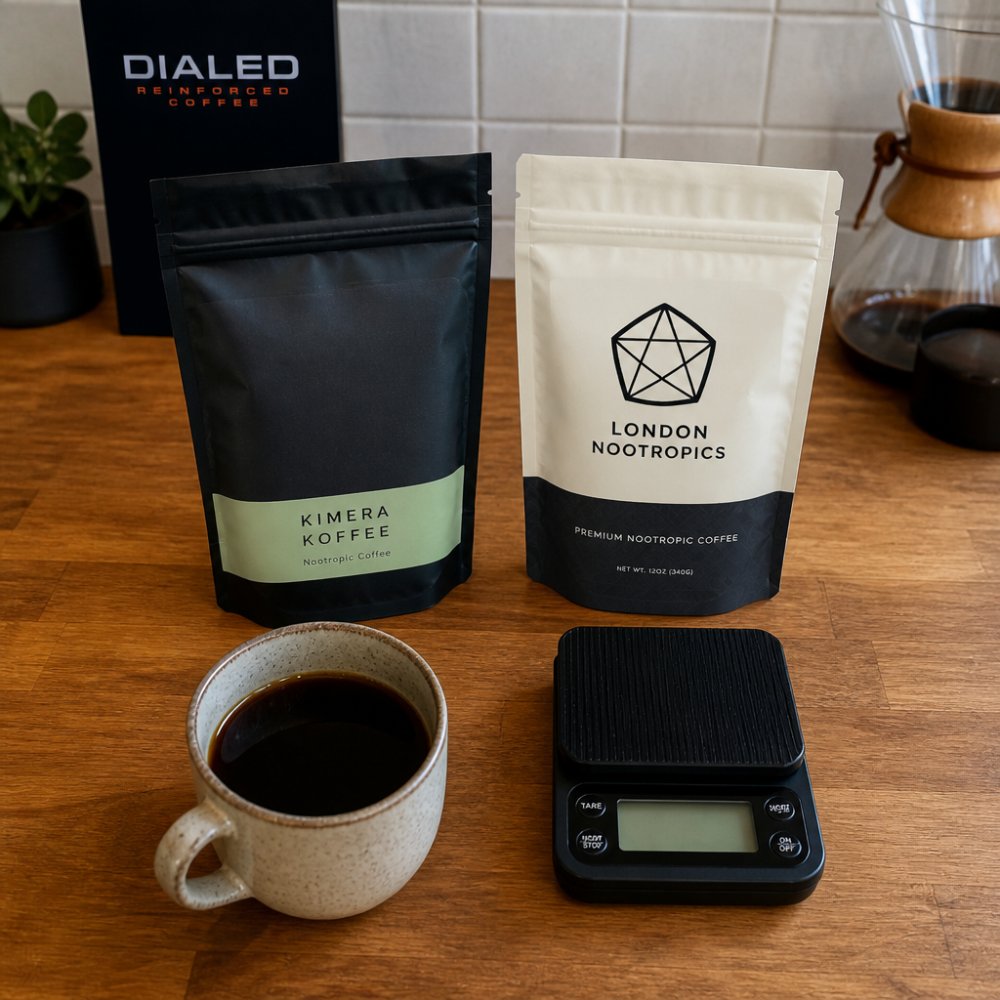
Here is the short version before we get into the details:
| Factor | Kimera Koffee | London Nootropics |
|---|---|---|
| Base | Ground coffee | Ground and instant blends |
| Caffeine | Full strength | Standard to reduced |
| Hero ingredients | Taurine, L-theanine, Alpha-GPC | Adaptogens, functional mushrooms |
| Best for | Heavy lifters, high-output work | Calm focus, stimulant sensitivity |
| Format | Ground | Ground and instant |
Kimera Koffee Ingredients: What's Actually in the Blend
Kimera Koffee ingredients center on a coffee base reinforced with taurine, L-theanine, Alpha-GPC, and Rhodiola rosea, built around physical and cognitive output rather than relaxation. What most guides miss: "nootropic coffee" on a label tells you almost nothing, dose matters far more than the ingredient list.
The formula leans on:
- Taurine, often associated with energy drinks and physical performance
- L-theanine, an amino acid found in green tea that many people use to smooth out caffeine
- Alpha-GPC, a choline source studied for cognitive support
- Rhodiola rosea, an adaptogen traditionally used for fatigue resistance
A common mistake is assuming a longer ingredient list means a stronger product. A short list with transparent doses beats a long list with vague ones, and Kimera does not publish exact milligram amounts for every active.
If you want to check what independent researchers say about these compounds, the NIH Office of Dietary Supplements maintains plain-language fact sheets on most of them.
London Nootropics Coffee Review: Flavor, Format, and Focus
London Nootropics coffee review coverage usually focuses on the brand's adaptogen-first approach: blends pairing coffee with functional mushrooms and adaptogens, sold as ground coffee and single-serve instant stick packs.
Here is how the two formats actually behave in daily use:
| Format | What you do | Time to cup | Best for |
|---|---|---|---|
| Ground | Grind or pre-ground, brew in dripper or French press | 4-6 minutes plus cleanup | Home routines, people who want brew control |
| Instant stick | Tear, add hot water, stir | Under 1 minute | Travel, office kitchens, early flights |
The instant sticks are the standout for convenience: tear, add hot water, done.
Flavor needs managing: these are coffee blends, not candy. The mushroom content adds an earthy, slightly woody note some love and others tolerate.
Focus effects are gentler than Kimera's. Stimulant-sensitive users often prefer this profile because it avoids the sharp spike, but the lift feels smaller during long deep-work sessions.
The formulation problem both brands share
This is the part most reviews skip. A functional coffee label can list taurine, L-theanine, Alpha-GPC, Rhodiola, lion's mane, and cordyceps and still tell you almost nothing, because dose determines whether you feel anything.
With a "proprietary blend," you cannot back-calculate how much of any compound you get, compare two products on formulation, or predict whether the blend smooths out caffeine or does nothing.
A practical way to read any of these labels:
- Look for a caffeine figure in milligrams per serving. If it is missing, assume full-strength coffee until proven otherwise.
- Look for individual milligram amounts next to each active. If they are grouped under one blend weight, treat the doses as unknown.
- Check the serving size against the scoop or stick you actually use. A label dose means nothing if you scoop double.
If you want to check what independent researchers say about these compounds, the NIH Office of Dietary Supplements maintains plain-language fact sheets on most of them.
Where the two brands actually diverge
Strip away the marketing and the split is mechanical:
- Base and caffeine load. Kimera keeps a full-strength coffee base. London Nootropics offers blends with a moderated stimulant load, which is the main reason stimulant-sensitive drinkers gravitate to it.
- Hero actives. Kimera leans on taurine, L-theanine, Alpha-GPC, and Rhodiola for output. London Nootropics leans on adaptogens and functional mushrooms for a calmer curve.
- Format flexibility. Kimera is ground only. London Nootropics gives you ground and instant, which is a real convenience advantage on travel days.
- Taste ceiling. Ground coffee lets you dial in grind, ratio, and temperature. Instant fixes those variables, so you trade peak flavor for speed.
Neither brand publishes exact milligram amounts for every active, so you are comparing disclosed formats and caffeine posture, not doses. A label you can actually read beats a longer ingredient list.
Nootropic Coffee Caffeine Content: Dose, Stimulation, and Crash Risk
Nootropic coffee caffeine content varies wildly by brand, and that variance is the main driver of jitters and crashes. Kimera Koffee keeps full-strength caffeine; London Nootropics offers blends with a moderated stimulant load. That single difference explains most of the experience gap.
Start with a baseline. A standard 8-ounce cup of brewed coffee runs roughly 95 milligrams of caffeine, according to the FDA's guidance on caffeine and health.
That distinction decides whether you get smooth energy or a spike-and-crash cycle.
Reading the stimulant profile of each brand
| Factor | Kimera Koffee | London Nootropics |
|---|---|---|
| Base | Full-strength ground coffee | Ground and instant blends |
| Caffeine posture | Full strength per cup | Standard to reduced, depending on blend |
| Theanine | Present in formula | Present via adaptogen-forward blend |
| Expected onset | Fast, 15-30 minutes | Gradual, 20-45 minutes |
| Expected curve | Higher peak, faster fade | Lower peak, flatter fade |
| Crash risk | Higher if stacked | Lower, especially for sensitive users |
Two caveats: neither brand prints a per-serving milligram figure for every active, so the caffeine posture above reflects disclosed base and format, not a lab-verified number; and instant usually delivers less caffeine per serving than a brewed cup.
What actually drives crash risk
Three things drive crash risk, and only one is the brand:
- Total caffeine dose per serving. Full-strength blends hit harder and fade faster. A 95 mg cup and a 200 mg cup feel like different products even if the label says "coffee."
- Presence and dose of L-theanine. Theanine softens caffeine's edge and extends the curve; the commonly studied ratio is roughly 1:1 to 2:1 theanine to caffeine. If a blend does not disclose its theanine amount, you cannot know whether it is doing anything.
- Timing and stacking. Adding a nootropic coffee on top of three existing cups is how people end up shaky and anxious. Caffeine's half-life is roughly 3-5 hours in most adults, so a 4 p.m. cup can still be active at 9 p.m.
If you already drink multiple cups a day, swap one for a dosed blend rather than adding another. Replace your current intake, do not pile on top of it.
A practical way to find your ceiling
Most adults tolerate up to about 400 mg of caffeine per day without adverse effects, per the FDA's commonly cited guidance, roughly four 8-ounce cups of standard coffee. Near that line, a full-strength functional coffee is a substitution, not an addition.
Nootropic Coffee Side Effects: Who Should Be Careful
Nootropic coffee side effects are mostly caffeine-related: jitters, elevated heart rate, disrupted sleep, and anxiety in sensitive people. Anyone who reacts badly to standard coffee should treat these products with the same caution. Adaptogens and amino acids are generally well tolerated at typical doses, but that is not the same as right for everyone.
Pay attention if you:
- Are sensitive to stimulants and get shaky after one cup
- Have an anxiety disorder, where caffeine can amplify symptoms
- Take prescription medication, since some compounds can interact
- Are pregnant or nursing, where caffeine limits are stricter
- Have a heart condition or uncontrolled blood pressure
One more caution: if a label hides doses behind a "proprietary blend," you cannot calculate how much caffeine or active you are getting. That is a safety problem, not a marketing quibble.
Taste, Preparation, and Daily Convenience
Taste and preparation split these two brands cleanly. Kimera is a traditional ground coffee you brew in a dripper or French press; London Nootropics offers ground coffee and single-serve instant sticks.
A practical note on taste testing: brew both the same way, black, no sugar, before you judge. Milk and sweetener mask the earthy notes that distinguish these blends.
If you want a barista-style cup without the guesswork, a dosed blend you scoop and brew like normal coffee lands in the middle: real coffee flavor, consistent serving size, no separate supplement routine.
Value and Cost Per Serving: What You Pay For
Value in nootropic coffee comes down to cost per serving, not sticker price. An expensive-looking bag often costs less per cup than a cheap bag you use twice as fast. Run this math before you buy:
- Divide the bag price by the servings listed on the label.
- Compare that to your current coffee cost per cup.
- Add back the cost of any separate supplements the blend replaces.
That third step changes the picture: if a blend replaces a choline supplement, an adaptogen capsule, and a cup of coffee, effective cost per serving drops sharply.
This is where transparency earns its keep.
We built DIALED around that principle. Our DIALED Reinforced Coffee Pouch at $59.00 for a 30-day supply combines full-strength coffee with 11 nootropic and adaptogenic ingredients, each individually dosed and disclosed.

For a broader look at how the supplement industry handles dosing claims, the FTC's guidance on health claims in advertising is worth reading before you spend on any functional beverage.
Conclusion: Which Nootropic Coffee Fits Your Routine?
Pick Kimera Koffee if you want full-strength caffeine and a performance-first formula and are fine brewing ground coffee yourself. Pick London Nootropics if convenience and a gentler stimulant profile matter more than raw intensity. If you want the full-strength coffee hit with every active ingredient dosed and printed on the label, that is what we built DIALED to do.
The hard part is not choosing between these two. It is finding a nootropic coffee that tells you what is actually inside it. Most brands hide doses behind proprietary blends, leaving you guessing about caffeine load, active amounts, and jitter risk.
Frequently Asked Questions
Which is better, Kimera Koffee or London Nootropics?
It depends on your priorities. Kimera Koffee is a ground coffee with added nootropics, so it suits people who want a traditional brewing routine with extra cognitive support. London Nootropics focuses on instant and ground blends with adaptogens and functional mushrooms, which appeals to those who want convenience or a gentler caffeine curve. Compare caffeine content, ingredient transparency, and cost per serving before deciding. If you want full-strength coffee with disclosed nootropic doses, DIALED Reinforced Coffee is another option to evaluate ($59.00 for a 30-day pouch).
What ingredients are in Kimera Koffee?
Kimera Koffee combines ground coffee with a nootropic blend that typically includes L-theanine, alpha-GPC, and rhodiola, though exact amounts can vary by product. Some versions also include taurine or other amino acids. Because the label may list these under a proprietary blend, you might not see individual doses. If verified ingredient amounts matter to you, look for brands that disclose every dose on the label. DIALED Reinforced Coffee, for example, lists each nootropic separately.
How much caffeine is in Kimera Koffee and London Nootropics?
Caffeine content varies by product and serving size. Kimera Koffee generally has around 100-150 mg per cup, similar to a strong drip coffee. London Nootropics offers blends with varying caffeine levels, often lower per serving, especially in their mushroom-forward options. Always check the current label because recipes change. For reference, an 8 oz cup of regular coffee has about 95 mg. If you are sensitive to stimulants, start with a smaller serving to gauge your response.
Does nootropic coffee help with focus?
Nootropic coffee aims to support focus by pairing caffeine with ingredients like L-theanine, which can smooth out the caffeine spike and reduce jitters. Some users report better mental clarity and sustained attention. However, individual results vary, and the evidence for many nootropic compounds is still limited. The effect depends on dose, your tolerance, and how the product fits your overall routine. For deep work, a product with disclosed doses lets you track what actually helps.